Rockfall containment
Draped HDG steel-wire netting and high-tensile TECCO mesh, anchor-pinned to the face, to contain loose rock and debris on cuttings, rock faces and quarry slopes. Mesh type and anchor pattern engineered to BS 1722 / EOTA TR026.
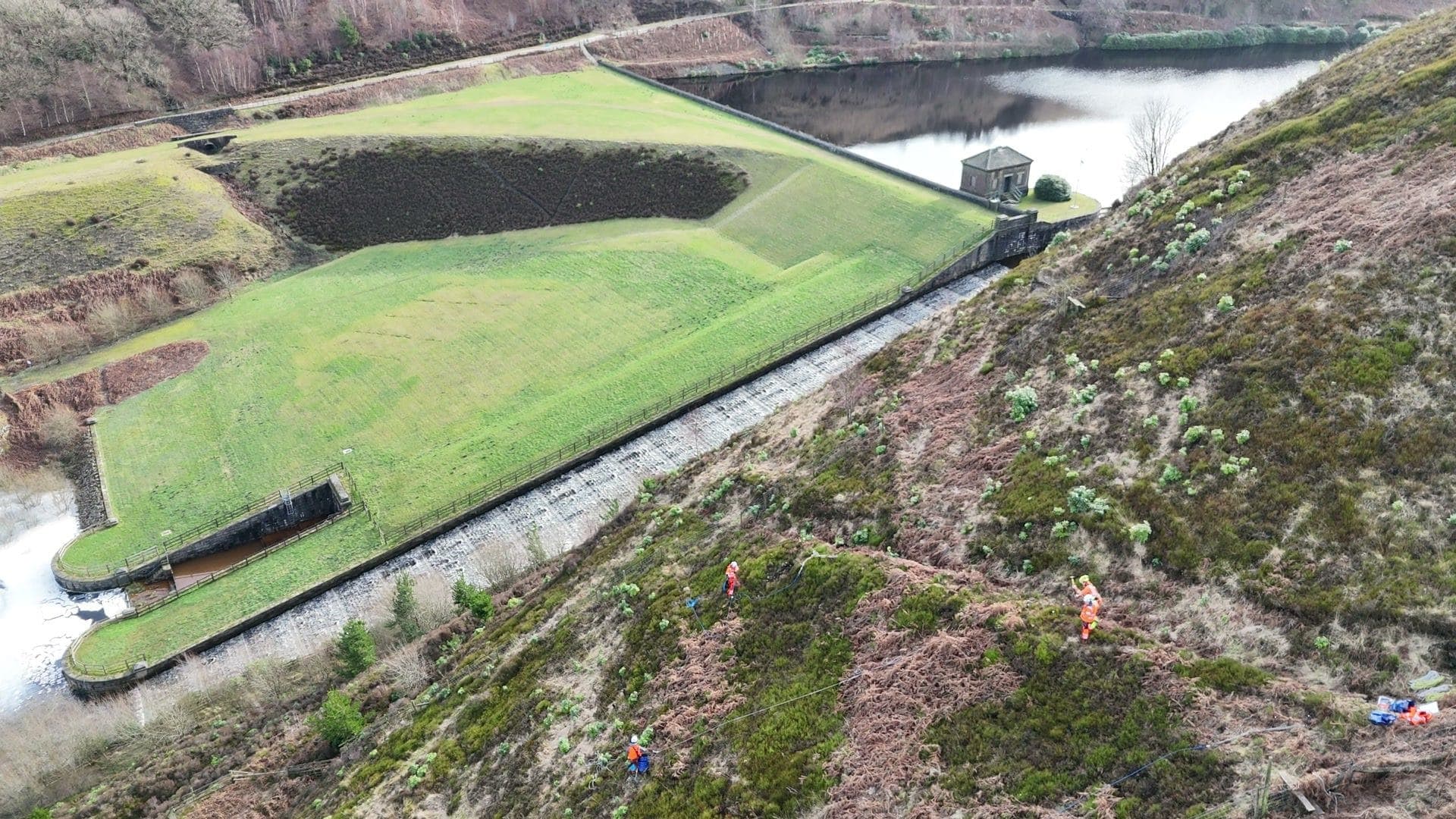
Slope stabilisation, rock anchors and rockfall mitigation on rail, highways and infrastructure cuttings — delivered by IRATA + RISQS-accredited geotechnical teams.
Geotechnical rope access stabilises steep cuttings, embankments and rock faces using engineered soil nails, rock anchors and rockfall netting — installed by IRATA-certified technicians working directly on the slope rather than from scaffolded platforms below. The technique is the standard approach on the UK's rail and highway estate, where slope failure threatens the line or carriageway and conventional plant access is impossible. Apex teams install passive rockfall protection (draped mesh, TECCO mesh, anchor-pinned panels), active stabilisation (soil nails grouted into the slope with geotextile or mesh covers), and rock-bolted reinforcement of weathered rock faces. Every installation is engineered to project-specific pull-out tests and signed off with full geotechnical records — load-test certificates, drilling logs and photographic survey. RISQS accreditation lets us deliver under Network Rail possession; National Highways traffic-management protocols handle the highway side.
Part of Environmental Division.
Draped HDG steel-wire netting and high-tensile TECCO mesh, anchor-pinned to the face, to contain loose rock and debris on cuttings, rock faces and quarry slopes. Mesh type and anchor pattern engineered to BS 1722 / EOTA TR026.
Engineered stabilisation of over-steepened or failing soil and rock slopes — soil nails, rock anchors and reinforced facing combined to the slope's failure surface and design loads. The core remedial package on rail cuttings, highway embankments and infrastructure slopes.
Hot-dip galvanised steel nails grouted into the slope and pinned through geotextile or steel mesh facing — nail length, density and inclination designed to the failure surface, then proof-load tested and signed off with drilling logs and certificates.
Dynamic rockfall catch fences and barrier systems installed below or across the slope to intercept falling rock before it reaches the line, carriageway or working area. Energy-rated to the expected rockfall and anchored to engineered foundations.
Manual and mechanical scaling of loose, weathered or fractured rock from faces and cuttings — removing the hazard at source. Rope-access teams work the full face where plant can't reach, often the first phase before mesh, netting or fencing.
Geotechnical rope access is the standard delivery method for slope stabilisation on the UK's rail and highway estate, plus infrastructure, utility and quarry faces where conventional plant can't reach.
Contact our Environmental team today about your project. We aim to respond within 24 hours.