Abseil rails
Continuous BS EN 795 Class D rails mounted to the parapet or facade head — let rope-access teams move horizontally without re-rigging. The cleanest aesthetic solution for high-rise facades that need ongoing access.
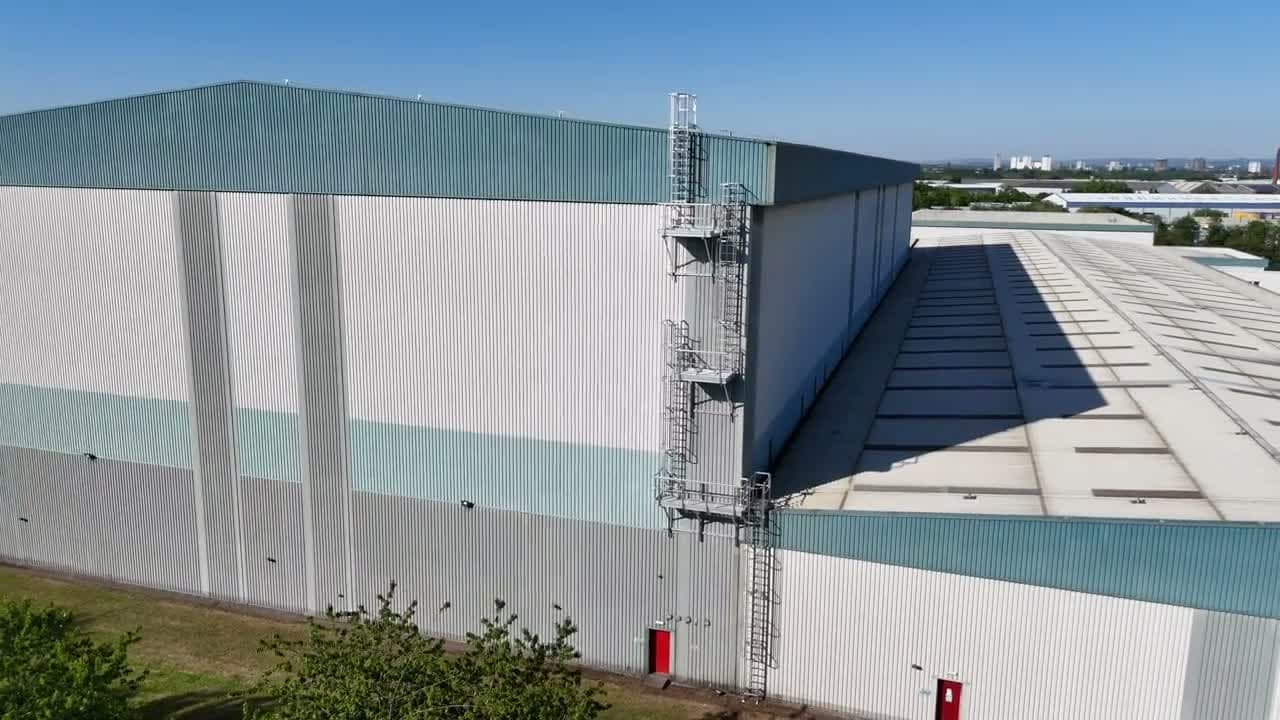
Specialist facade access systems — abseil rails, davit arm cradles and fixed anchors. Designed, installed and certified for safe ongoing maintenance and cleaning at height.
Facade access systems are the engineered safety infrastructure that lets maintenance crews work on building facades safely and repeatedly — across the lifetime of the building. The four core system types are abseil rails (continuous BS EN 795 Class D rails mounted along the parapet or facade head for rope-access tie-back), davit arms (pivoting beams that suspend cradles or operatives over the facade), fixed abseil anchors (discrete tie-back points at known coordinates), and suspended cradles (powered access platforms working off davit arms or monorail tracks, for tasks better suited to a platform than rope access). Apex designs and installs all four — typically as part of the original construction handover, or retrofitted onto existing high-rise where the original facade access provision is inadequate. Every system is BS EN 795 certified, load-tested and supported by an annual inspection programme to keep it in regulatory use throughout the building's life.
Part of Fall Protection Division.
Continuous BS EN 795 Class D rails mounted to the parapet or facade head — let rope-access teams move horizontally without re-rigging. The cleanest aesthetic solution for high-rise facades that need ongoing access.
Pivoting davit arms for cradle and operator suspension — fixed (permanent) and portable variants. Used where abseil rails aren't viable, or where suspended platforms are preferred over rope-only access.
Discrete BS EN 795 Class A anchors at engineered coordinates — used for tie-back, single-position rope work, or as supplementary anchors on a rail-fitted facade.
Suspended access cradles and platforms working off davit arms or monorail tracks — for facade tasks better suited to a powered platform than rope access, sized to the building and the work.
Facade survey, structural assessment and working-radius analysis; a fully-engineered BS EN 795 scheme with drawings and load calculations ready for tender or build; proof-load testing on commissioning and an annual recertification programme for the life of the building.
Facade access systems are required on any building where ongoing maintenance — cleaning, signage, glazing, repair — needs to happen above safe pole-reach. Apex delivers across the UK.
Contact our Fall Protection team today about your project. We aim to respond within 24 hours.