Apex Access Group
Trust. By Design
Apex Access Group — rope access road & rail works at height

Road & Rail rope access contractors

Rope access on Network Rail and National Highways structures — critical infrastructure inspection, repairs and maintenance.

What we do.

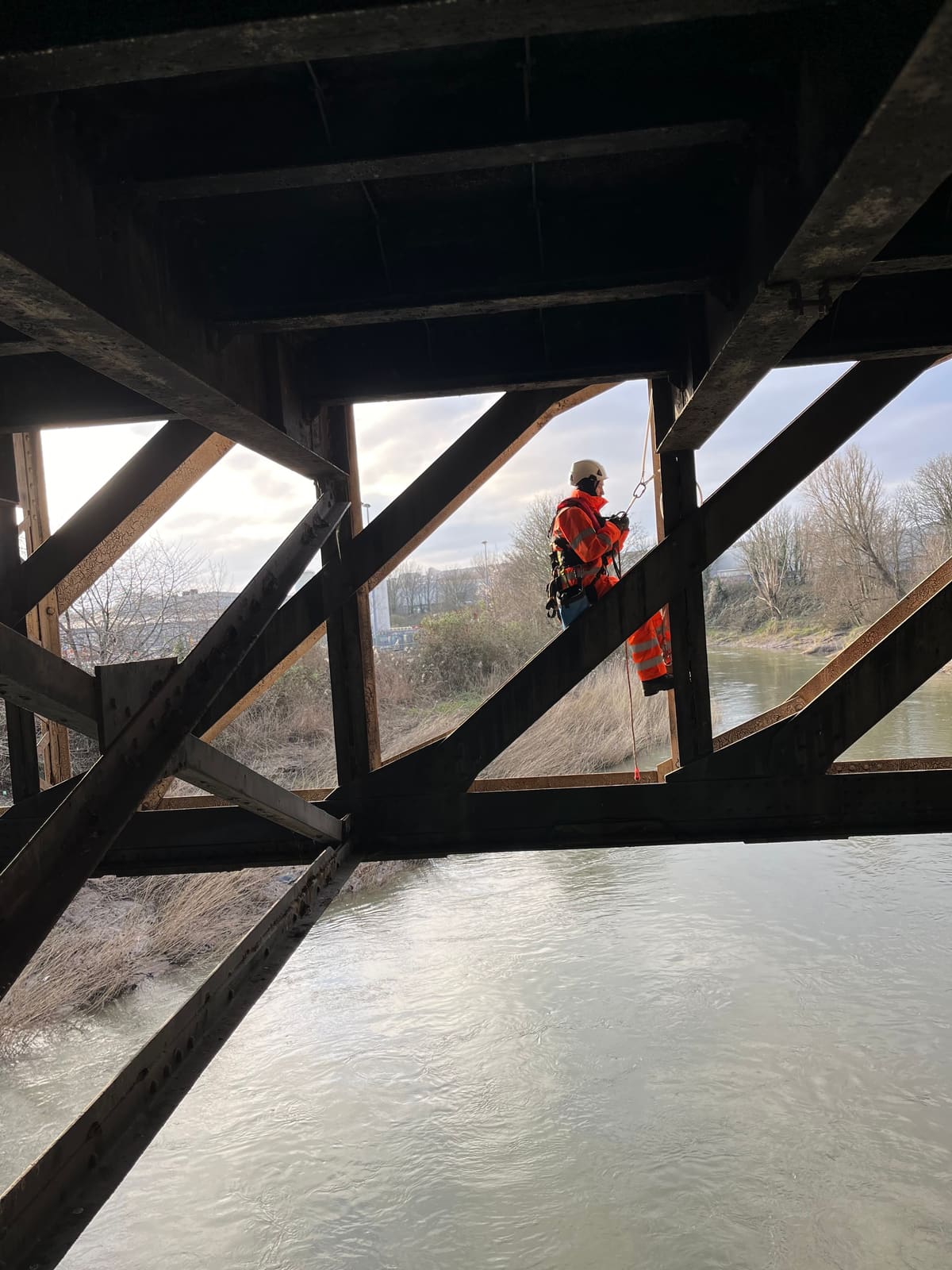
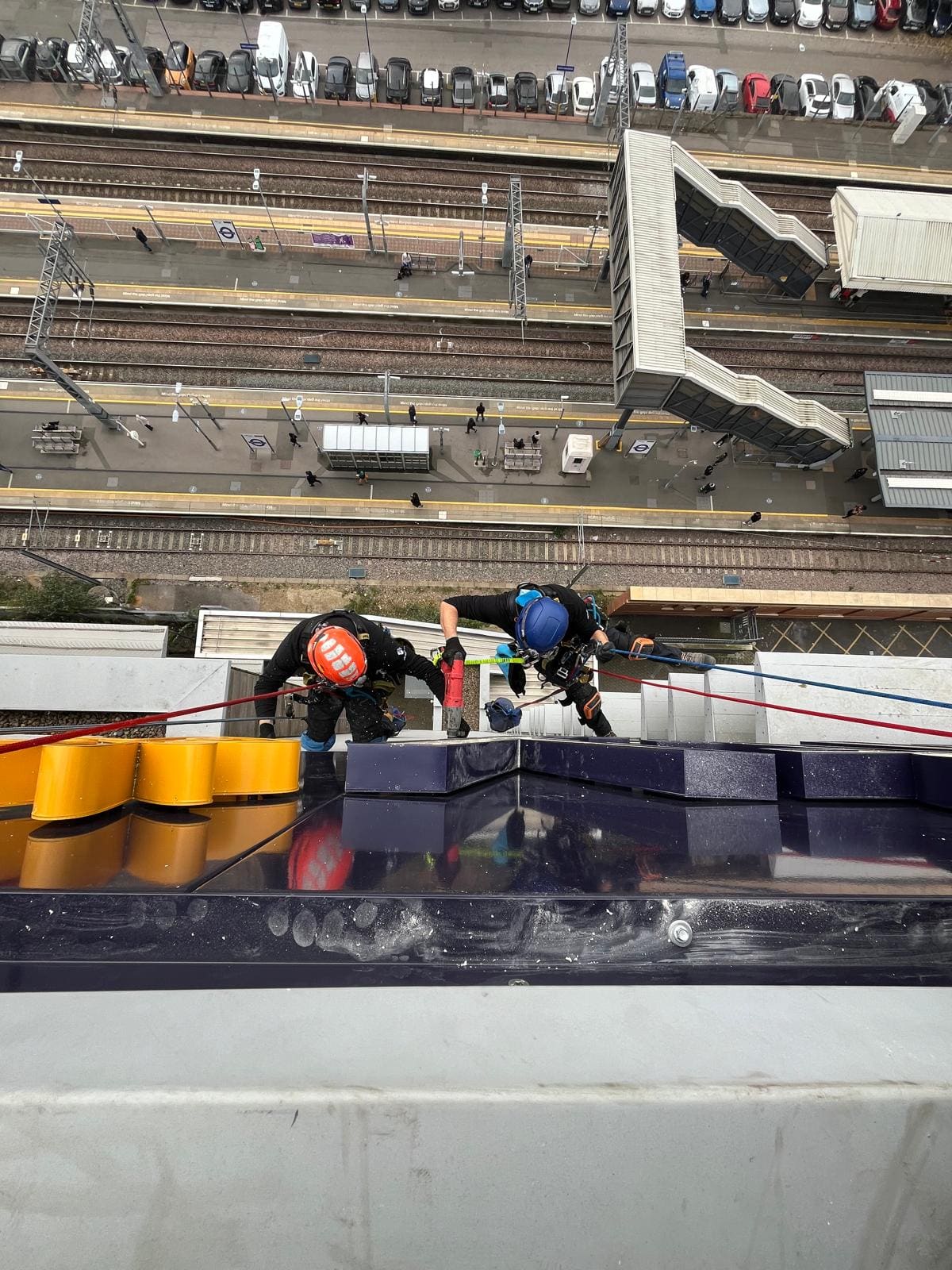
Apex operates in two modes on the UK's strategic transport network. We provide rope-access support to the bridge examination contractors working under Network Rail's STE04/STE07 regime and to the inspection contractors working under National Highways' CD350 framework — abseiling the close-quarter scope on bridges, viaducts, tunnels and retaining walls so the examination team can sign off the structure without scaffold or MEWP. We also deliver remedial works directly — concrete repair, masonry pointing, drainage clearance, vegetation control and protective-coating campaigns on the same assets — typically as follow-on programmes after the examination identifies the scope.

Teams hold IRATA Level 3 plus the rail competency stack — PTS (Personal Track Safety), COSS (Controller of Site Safety), IWA (Individual Working Alone) — and Apex operates under RISQS accreditation on Network Rail's electrified and non-electrified estates. On highways, work is delivered to CD350-aligned protocols, planned around lane closures and traffic-management windows. On examination support work, Apex abseilers feed close-quarter observations and photo-tagged defect records back to the examination contractor for inclusion in their BCMI, NR Ellipse or AMS report; on direct remedial works, Apex issues its own RAMS, defect close-out and O&M documentation.

The procurement-side win is straightforward: rope access preserves possessions and TM windows by removing the access-erection lead time from the programme. One self-contained team arrives, abseils, supports the examination or delivers the remedial scope, and clears site inside the booked window. No scaffold crew to mobilise separately, no snooper-truck booking conflicts, no extension of the works programme to accommodate access.

How we deliver.

Detailed & visual examinations

Visual and detailed examinations of Network Rail structures. Working in partnership with examination contractors, we provide rope-access support — close-quarter abseil access on STE07 detailed examinations of bridges, viaducts and rail structures, integrated into the examination team so the close-quarter scope lands within the possession.

Concrete & masonry repair

Spalling repair, crack injection, localised concrete patching and lime-mortar repointing on reinforced concrete and masonry highway and rail structures. Cathodic-protection installation where corrosion is structural. Delivered by the same in-house team that did the inspection — one supplier across the inspection-to-remedial cycle.

Principal & general inspections

Principal and general inspections of National Highways structures (CD350). Working in partnership with inspection contractors, we provide rope-access support — close-quarter abseil access on principal inspections of bridges and viaducts where MEWP and scaffold aren't viable, integrated into the inspection team and planned around the TM window.

Retaining walls & culverts

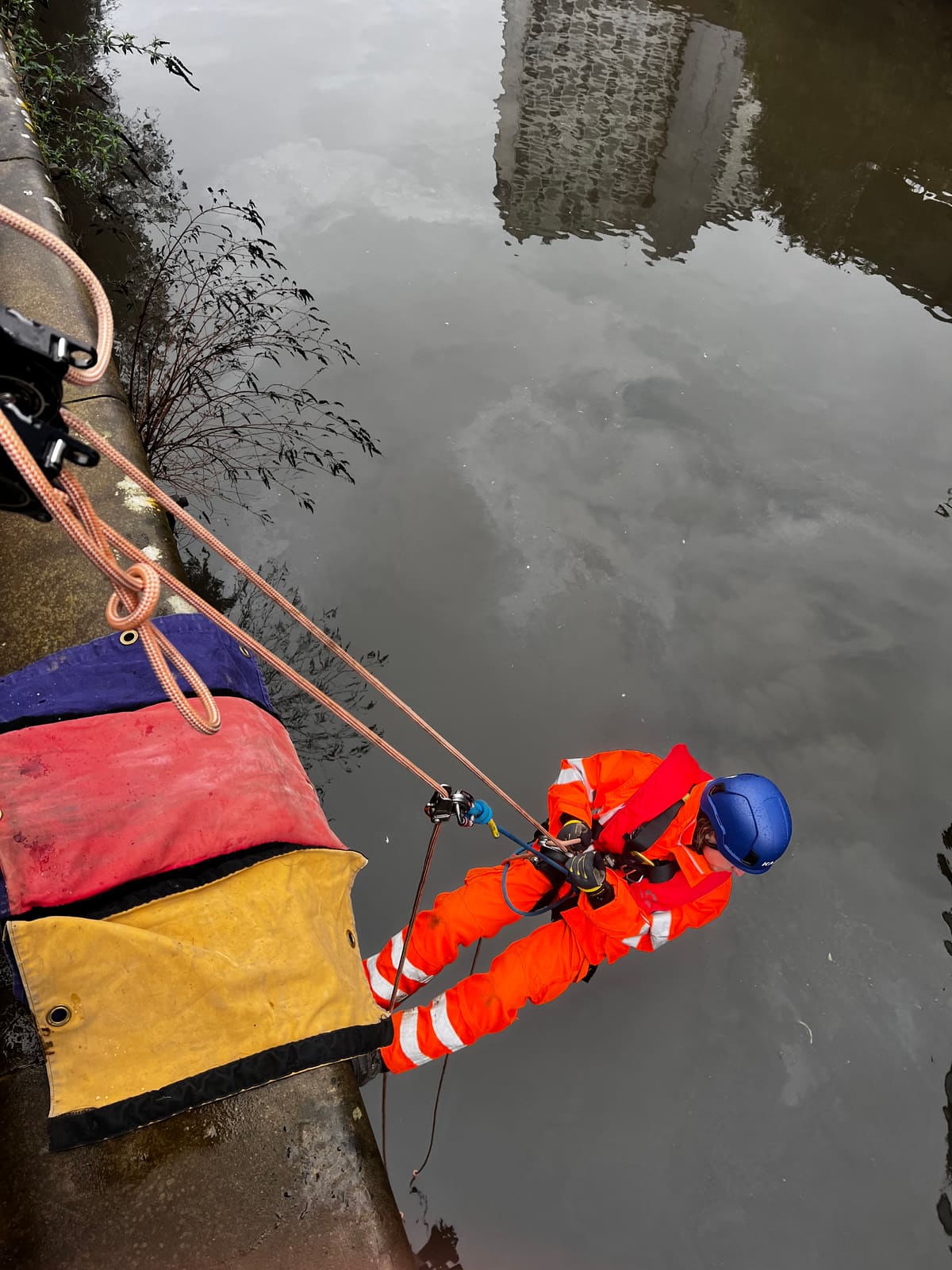
Inspection, lime-mortar pointing, drainage clearance and surface repair on rail and highway retaining walls and culverts. Crack-monitoring and structural-movement reporting where required. Rope access reaches the wall face directly — no need for the scaffold or boat access that retaining-wall inspection traditionally needs.

Embankment & viaduct de-vegetation

Rope-access clearance of vegetation from rail embankments, cuttings and viaduct faces — controlling root ingress that damages brickwork and maintaining lineside visibility. Cyclical maintenance under Network Rail's vegetation management regime; reactive clearance after weather events on highway slopes. Brickwork de-scaling on the same visit where required.

Tunnel portals & shafts

Inspections and remedial works on tunnel portals, ventilation shafts and adjacent masonry — under possession on rail, under TM and confined-space protocols on highway. Teams carry confined-space tickets where the shaft scope crosses into permit-required entry.

Where we deliver.

Apex partners with Asset Engineers, framework managers and tier-one principal contractors across the UK's strategic transport network — Network Rail and National Highways estates plus the road-over-rail interfaces between them.

  • Network Rail (RISQS-accredited)
  • National Highways framework
  • HS2 framework
  • Transport for London assets
  • Tier-one main contractors
  • Local authority highway estates
  • Light rail & tram operators

FAQs.

Are you RISQS-accredited for Network Rail work?
Yes — Apex holds current RISQS (Rail Industry Supplier Qualification Scheme) accreditation, and our teams carry the rail competency stack required for trackside work: PTS (Personal Track Safety), COSS (Controller of Site Safety), IWA (Individual Working Alone) and the rope-access core (IRATA). We work routinely under possession.
What's the difference between STE04 and STE07 examinations?
STE04 is Network Rail's visual examination — a condition check carried out annually. STE07 is the detailed examination — a more thorough inspection on a six-yearly cycle, with close-quarter access to every part of the structure. (On the highways side the equivalents are general inspections — biennial visual — and principal inspections — six-yearly close-quarter — under CD350.) Apex provides rope-access support across all four, integrating into the examination or inspection contractor's team to deliver the close-quarter scope without scaffold or MEWP.
Can rope access replace scaffold on a bridge inspection?
Yes — for most steel, masonry and concrete bridges, rope access provides comparable or better close-quarter access than scaffold, at a fraction of the cost and inside a smaller possession window. The exceptions are very large box girders where internal scaffold is needed for confined-space inspection, or specific defect types requiring stable working platforms.
How do you coordinate work under possessions and TM windows?
On rail, possessions are booked and planned by the Asset Engineer; on highways, traffic-management windows are coordinated with the relevant Area Manager. Either way Apex submits the work package weeks in advance, attends the pre-possession or pre-works briefing, and arrives on site with all PPE, RAMS and competence records ready. Teams are self-contained (no separate scaffold crew needed) which simplifies the possession or closure and maximises productive time inside the window.
How does the rope-access data feed into examination reports?
On examination-support work, Apex abseilers capture defect markup, geo-tagged photographs and condition observations and hand these to the examination contractor for inclusion in their report — FFL/SCMI scoring on rail (BCMI, NR Ellipse and AMS formats), CD350-aligned scoring on highway. On direct remedial works, Apex issues its own defect close-out, RAMS sign-off and O&M handover documentation.
Can you carry out remedial works as well as inspection support?
Yes — Apex operates in both modes. On inspections we provide rope-access support to the examination or inspection contractor; on remedial works we deliver directly. Concrete repair, crack injection, masonry pointing, anti-corrosive coating, drainage clearance, vegetation control and protective netting installation — all delivered by the same in-house team, typically as follow-on programmes once the examination identifies the scope.

Talk to our Rope Access team about road & rail

Contact our Rope Access team today about your project. We aim to respond within 24 hours.

  1. 1Contact
  2. 2Project
  3. 3Details