Apex Access Group
Trust. By Design
Apex Access Group — rope access fire protection works at height

Rope access fire protection

Specialist fire-safety works at height — sprinkler heads, intumescent coating, fire-stopping, aspirating detection and EWS1-relevant cladding inspection on industrial warehousing, production and distribution facilities.

What is rope access fire protection?

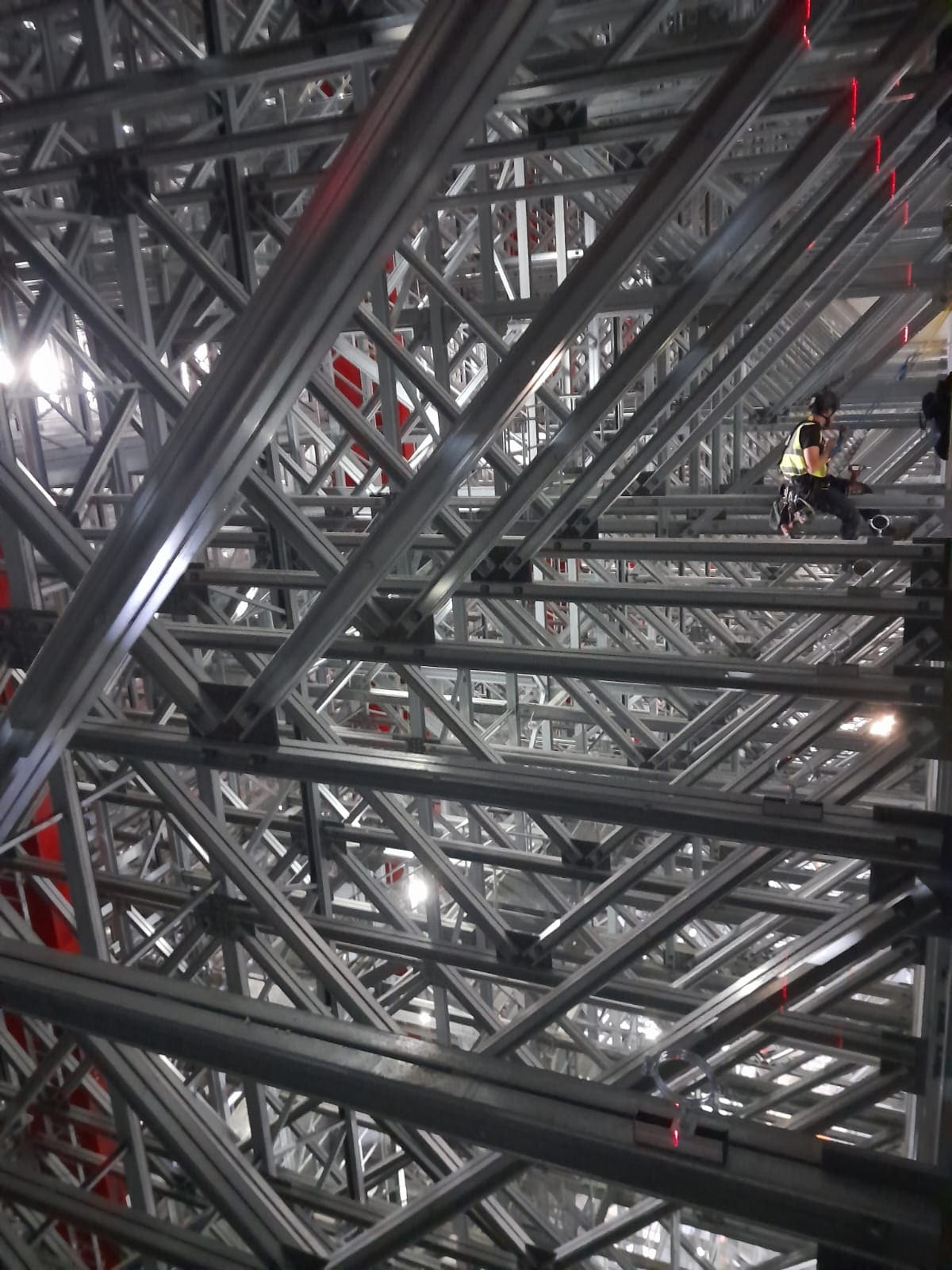
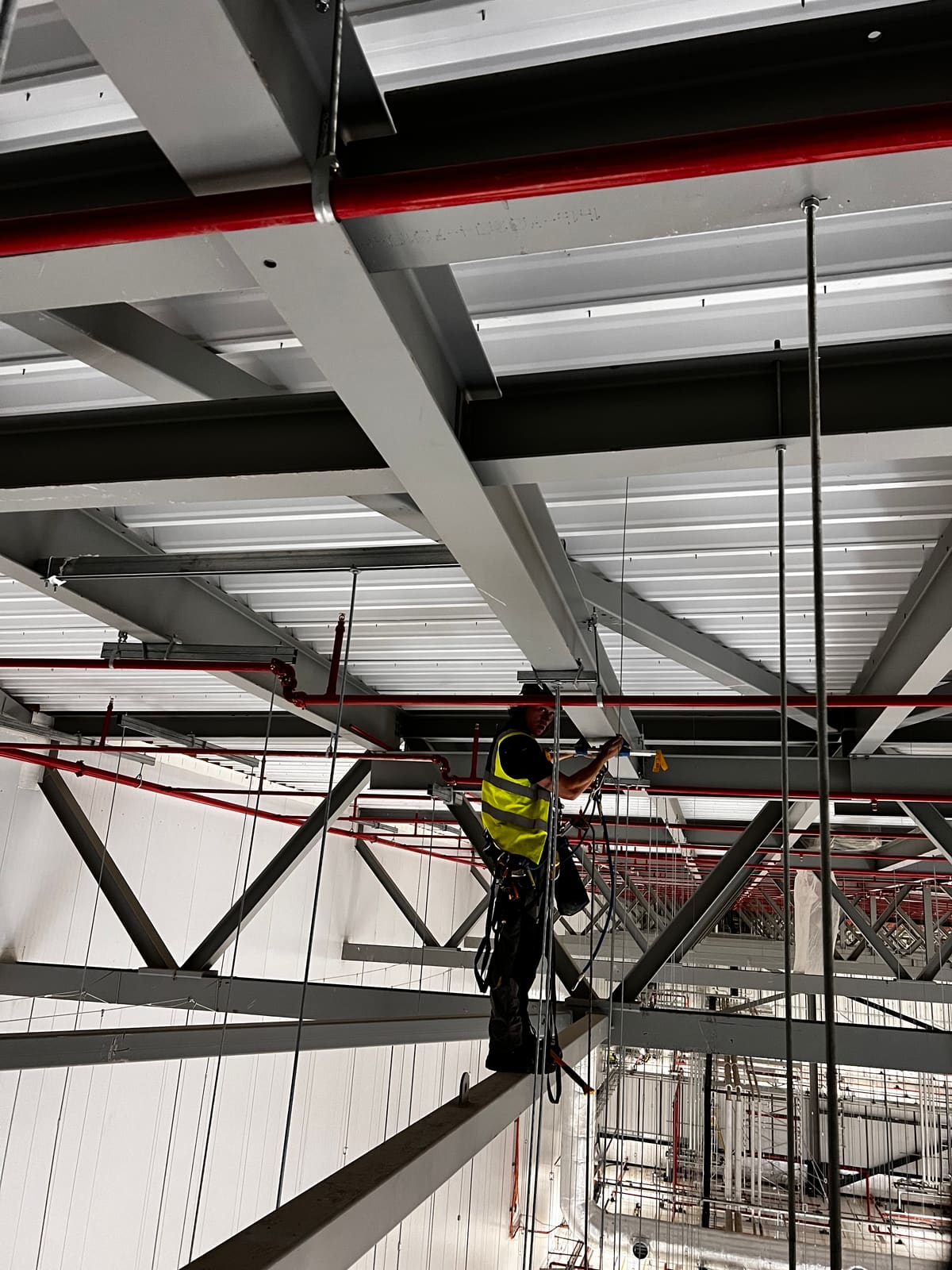
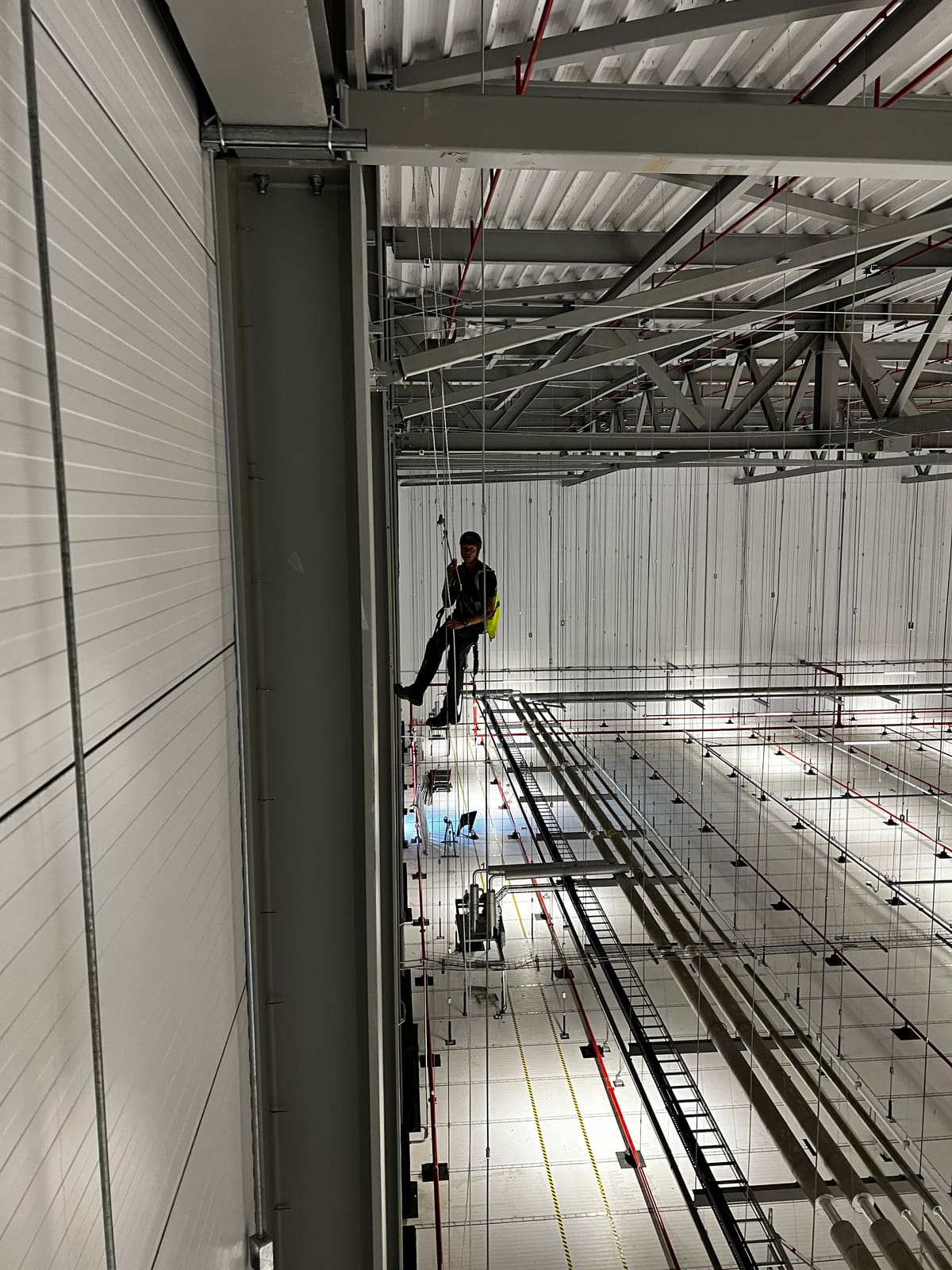
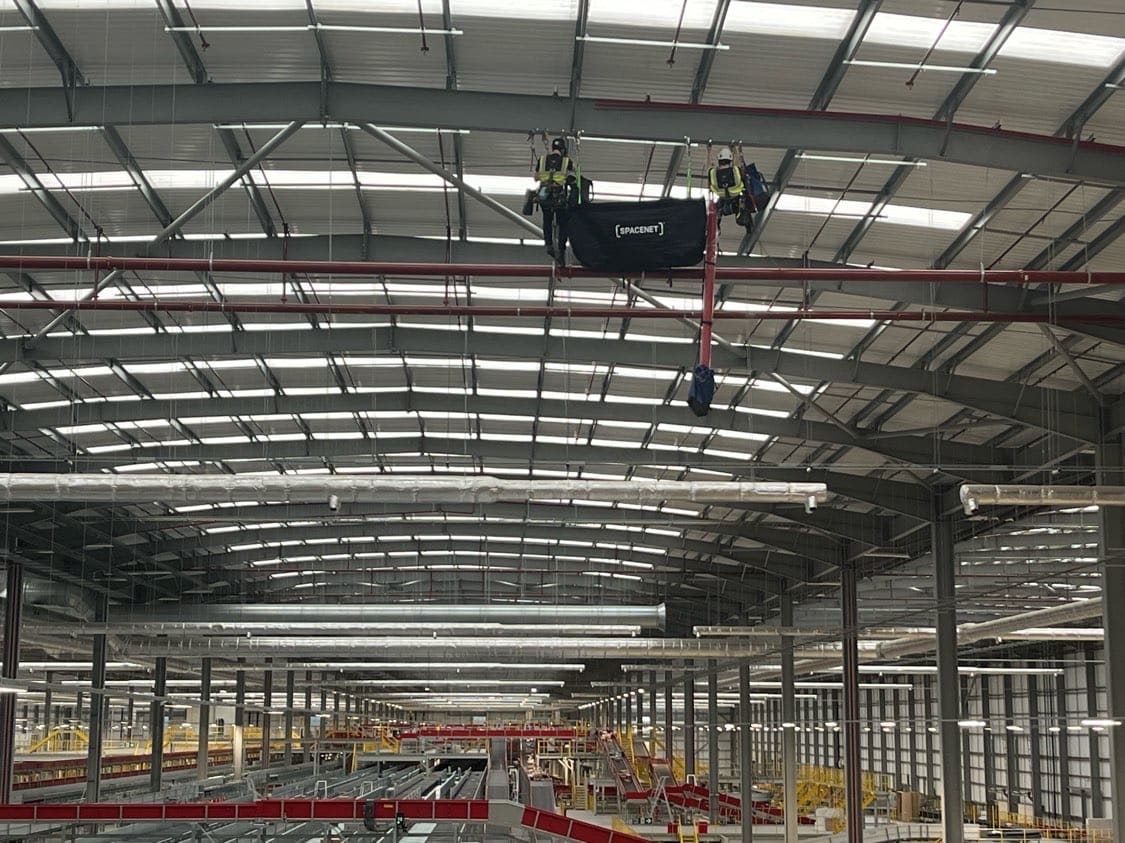
Rope access can be used to inspect, test, repair or install the full range of fire protection and detection systems where the work sits beyond reach of standard MEWP or scaffold access. Apex teams are IRATA-certified (Level 3 supervisor cover on every campaign) with the trade competencies and CSCS/SSSTS site qualifications needed to integrate with a tier-one principal contractor or fire-and-life-safety subcontractor. We cover sprinkler systems, intumescent fire-protection coatings, fire-stopping and compartmentation, aspirating smoke and conventional detection, and fire-damper inspection — across industrial warehousing, production facilities, distribution centres and complex commercial buildings. Work runs either as a specialist subcontractor to fire and life-safety contractors, or directly for principal contractors and building owners on new-build, retrofit and ongoing maintenance programmes. Every campaign runs to a documented quality-control regime — pre-works method statements and RAMS, drain-down and recharge coordinated with the building's fire engineer, photographic records of every penetration or installation point, and a handover pack that ties each item back to the asset register and the relevant compliance standard. Rope access keeps the facility operational throughout: heads replaced zone by zone, coating works phased around the production schedule, surveys completed without the scaffold programme or scissor-lift convoy that would otherwise stop the space.

How we deliver.

Sprinkler systems

Inspect, test, repair, replace or install sprinkler heads, pipework, hangers and bracketry at height — in high-bay warehouses, racking voids, plant rooms and atria. Like-for-like head campaigns, retrofit upgrades, and rope-access delivery of the high-level installation portion on new systems alongside the principal M&E contractor and fire engineer.

Aspiration systems

Install, test and maintain aspirating smoke detection (ASD) systems at height — racking voids, atria, data centres, cold storage and high-clean environments where conventional point detection isn't viable. Pipework runs, sampling-point positioning and commissioning to the manufacturer's sensitivity spec, delivered without scaffold or MEWPs.

Intumescent coatings

Application of intumescent fire-protection coatings to exposed structural steel at height — primary beams, portal frames and columns. Suitable for new-build, retrofit and remedial work where original coatings have degraded.

Fire stopping

Restoration of compartment integrity at riser, service and facade penetrations. Approved fire-stopping products — intumescent collars, fire-rated batt, mastic — applied to manufacturer's specification, with photographic records of every penetration and a certified handover pack.

Cladding inspections

Close-quarter cladding inspections at height — cavity barriers, fire-stopping, panel composition, fixings and fire-spread risk. Photographic survey packs with elevation drawings and detailed close-ups. Supports RICS EWS1 form completion on residential blocks within mixed industrial portfolios.

Beam detection systems

Install, align and maintain optical beam smoke detection systems in large open spaces where point detectors aren't suitable — warehouses, atria, sports halls and high-bay industrial buildings. Transmitter and reflector positioning, beam alignment and ongoing test access delivered without scaffold or MEWPs.

Oxygen reduction systems

Rope-access delivery of the high-level installation portion on oxygen reduction (hypoxic) fire-prevention systems — pipework runs, distribution diffusers and instrumentation in protected spaces such as data centres, cold storage, archives and high-value warehousing. Working alongside the principal contractor and fire engineer.

Where we deliver.

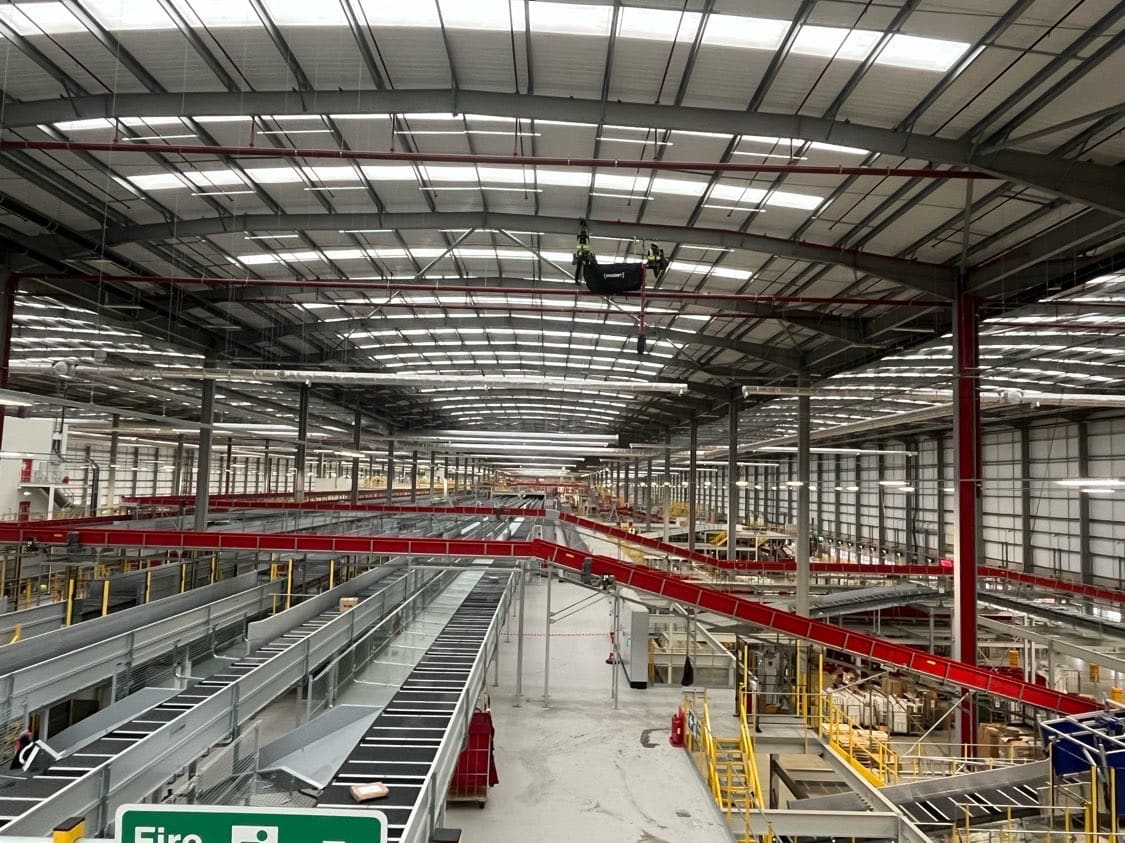
Rope access fire-protection works suit industrial warehousing, production and distribution facilities where scaffold or MEWP convoys would shut the space down or disrupt live operations.

  • Distribution & logistics warehousing
  • High-bay storage & racking facilities
  • Manufacturing & production plants
  • Cold storage & food production
  • Data centres & critical infrastructure
  • Process plants & utilities
  • Recycling & waste-management facilities
  • Pharma & life-sciences facilities

FAQs.

Can production facilities stay operational during works?
Yes — with robust planning and coordination, fire-protection works can usually be delivered without shutting a production facility down. Campaigns are sequenced around the production schedule with exclusion zones beneath the rope-access workfront, controlled permits and access windows agreed in advance with the building's principal contractor and fire engineer. That said, many industrial clients prefer to use planned shutdowns to deliver these works — particularly for trades like intumescent coating, hot works or large-scale sprinkler upgrades where the access and cure-time logistics suit a quiet site. We work either way.
Can you work in clean rooms and regulated production environments?
Yes — Apex has delivered rope-access fire-protection works in food production clean rooms, operating within the facility's hygiene protocols, gowning and FOD-control regime. The technique suits regulated environments: small footprint, no contamination from scaffold platforms or scissor-lift hydraulics, and works phased around production runs so the clean-room state isn't broken unnecessarily. Other regulated environments — pharma GMP, semiconductor, data centre — share similar access principles but each carries its own induction and protocol requirements; we scope these with the building's compliance lead before mobilisation.
Do you work overnight, at weekends or during planned shutdowns?
Yes — out-of-hours, weekend and planned-shutdown working is standard for live industrial sites. Where production schedules, FM access windows or insurance constraints require it, rope teams mobilise overnight, across weekends or back-to-back during a planned shutdown to compress the works into the available window. Double-shift capability, weekend mobilisation and shutdown-aligned sequencing are agreed up-front, with cost implications scoped as part of the quote.
Do you provide a pre-works site survey before mobilisation?
Yes — a pre-works site survey is part of the standard mobilisation sequence on all but the smallest jobs. Survey scope typically covers access constraints, anchor and rescue planning, existing fire-protection asset condition, services and exclusion zones, plus the permits required (hot works, isolations, confined space). The survey output is the basis for the RAMS, method statement and final scope of works — agreed with the building's principal contractor and fire engineer before any team mobilises. On larger campaigns the survey is photographically documented and tied to elevation drawings so the install team works to the same reference as the inspector.

Talk to our Rope Access team about fire protection

Contact our Rope Access team today about your project. We aim to respond within 24 hours.

  1. 1Contact
  2. 2Project
  3. 3Details