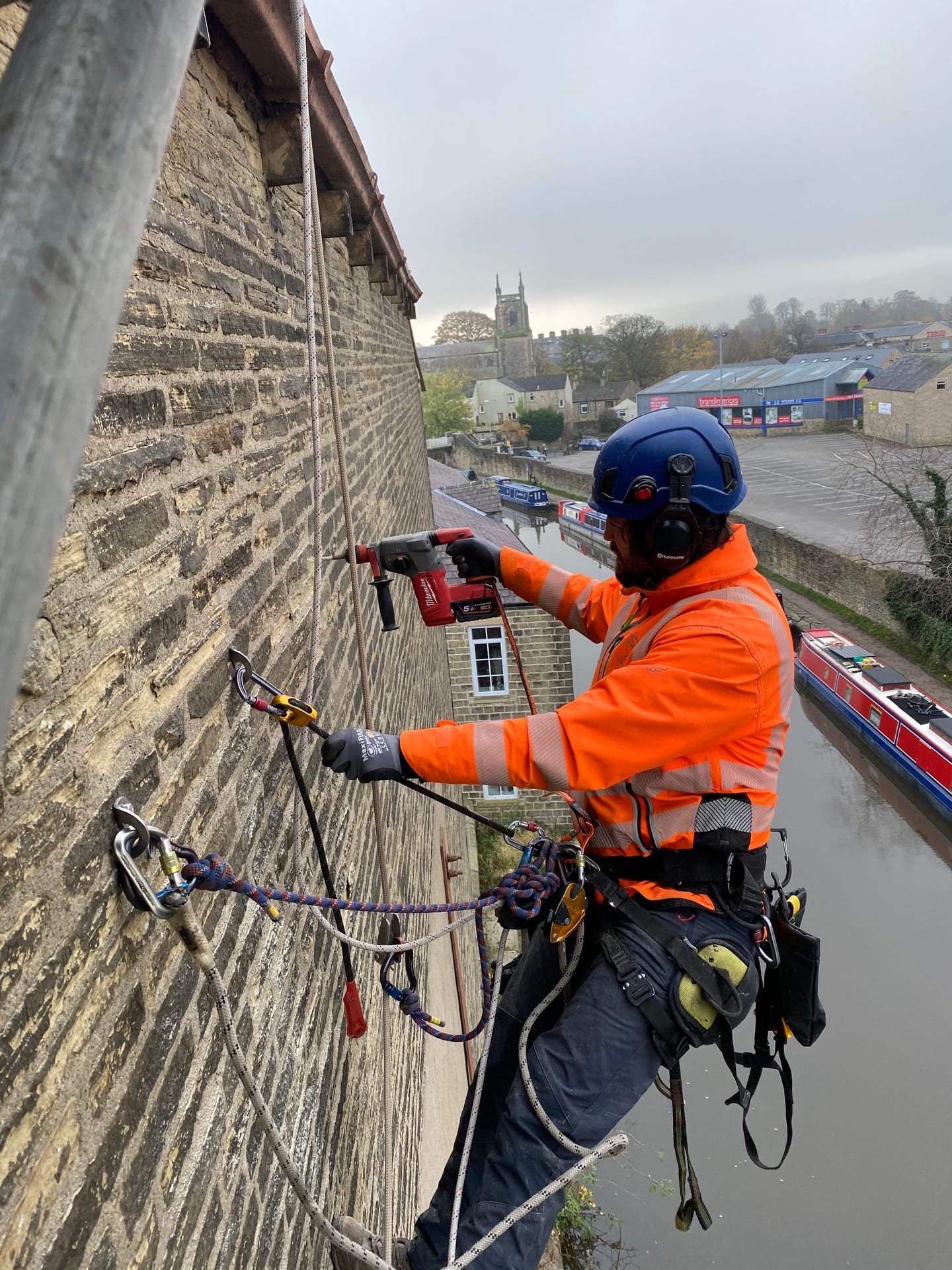
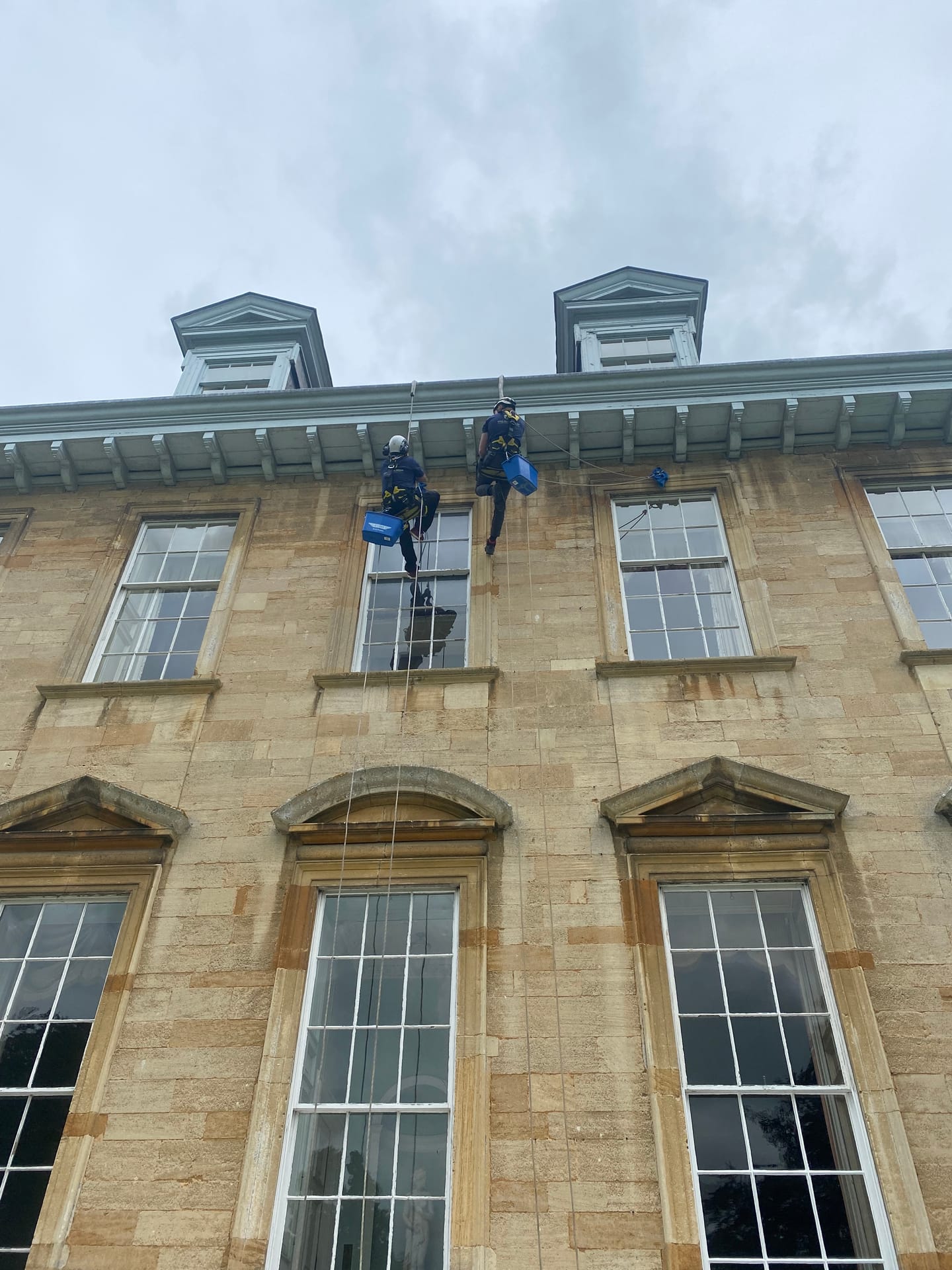
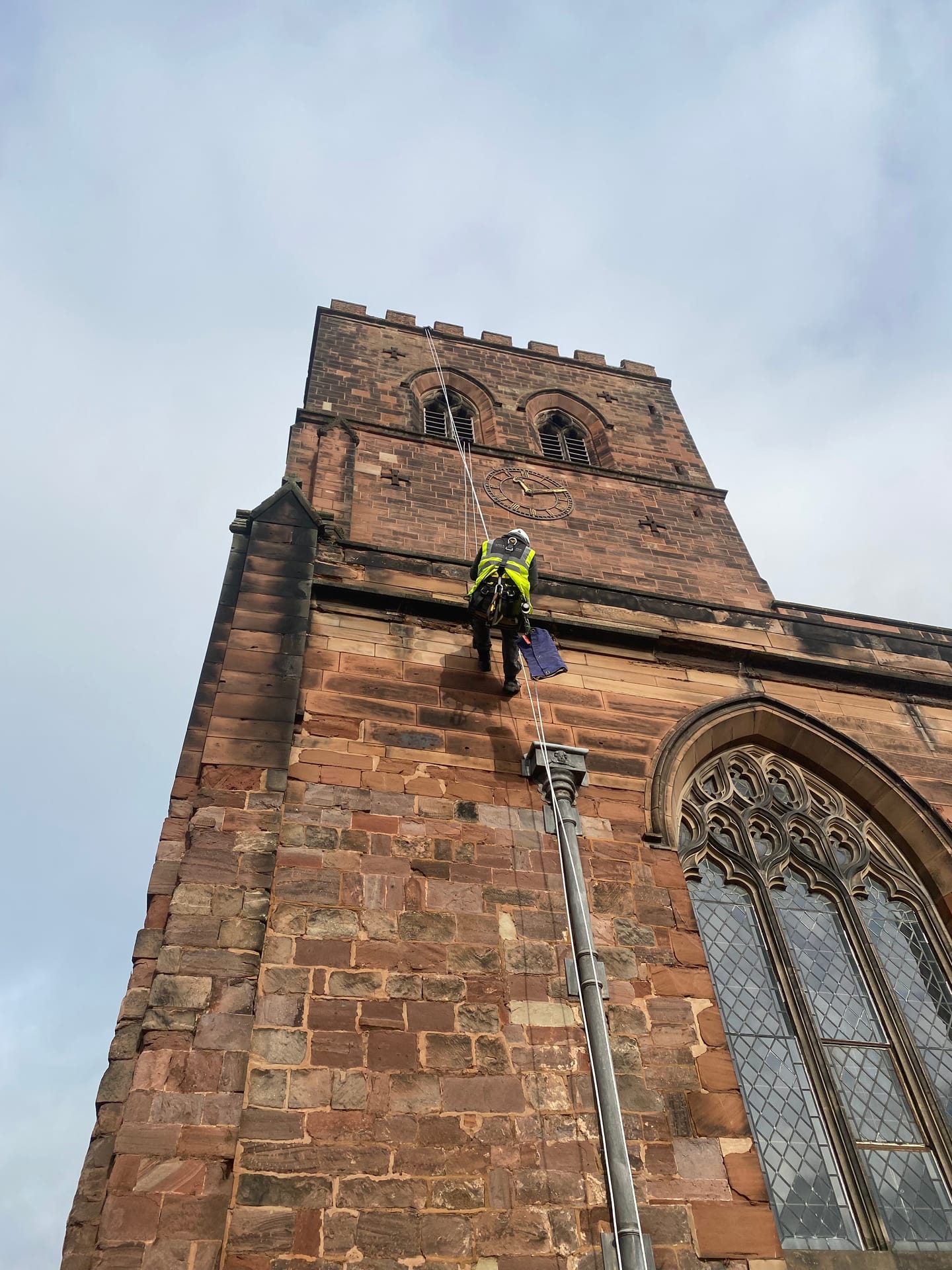
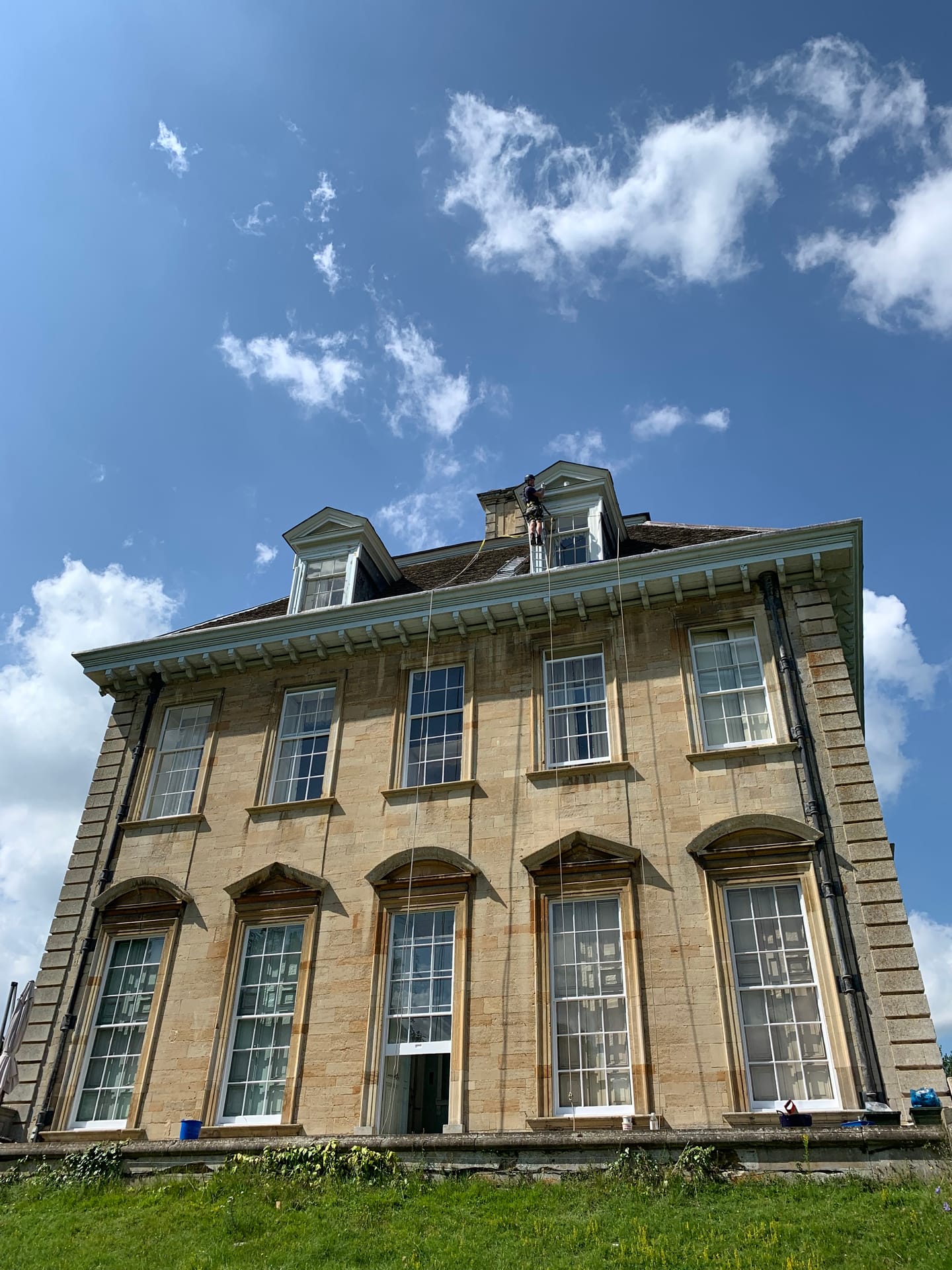
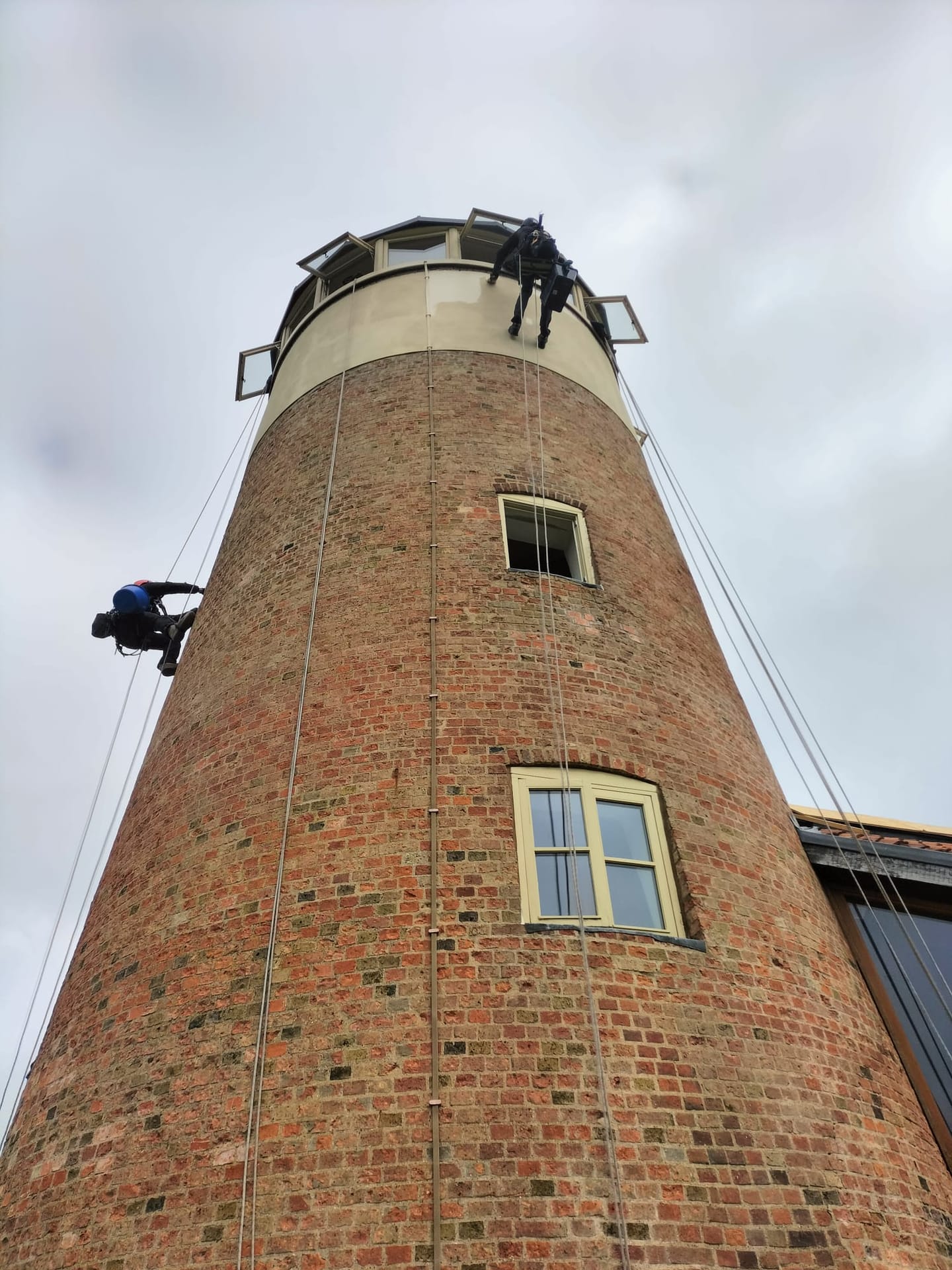
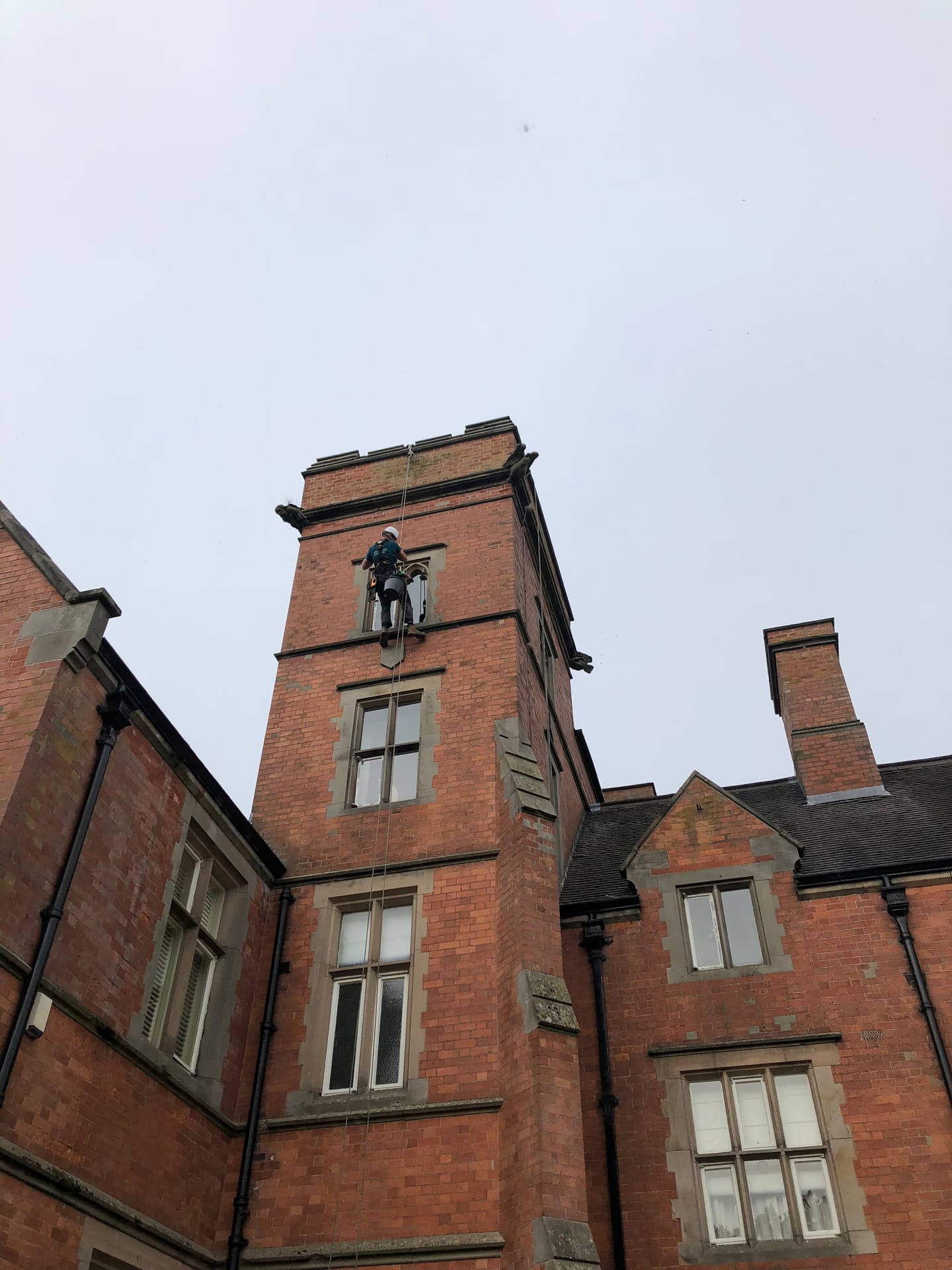
Conservation at height combines specialist craft trades — stonemasonry, lime-mortar repointing, leadwork, timber repair and decorative stone — with rope-access delivery, allowing repair to a building's fabric without erecting scaffold. Works are typically scoped from a close-up survey of the elevation, often prompted by a quinquennial inspection, condition survey or reported defect, with method statements and any test patches agreed before repairs begin.
Methods are chosen for compatibility with the existing fabric. Lime-based mortars — hydraulic lime (NHL 2, 3.5 or 5) or non-hydraulic lime putty — are matched to the original mix in binder, aggregate, colour and grading; indent repairs use salvaged or quarry-matched stone set in lime mortar; traditional cast- and milled-lead detailing is used on valleys, parapets and rainwater goods; and appropriate paint systems are used on timber. The governing principle is to repair like-for-like and avoid introducing harder, less permeable materials — such as cement-rich mortars — that trap moisture and accelerate decay of the surrounding stone.
Lime is used in preference to cement because it is softer and more vapour-open than the masonry it joins: it lets the wall breathe, flexes with seasonal movement, and is sacrificial — failing in the joint rather than the stone. Hydraulic limes gain strength through a slow set, so repointing and rebuilding are protected from rain and frost while they cure, and programmes allow for the longer cure times lime requires.
Rope access suits conservation work where scaffold would be disproportionate, intrusive or impractical — towers and spires, elevations over water, live roads or occupied buildings, and discrete high-level defects that do not justify wrapping an entire structure. It keeps the building scaffold-free, removing the cost and programme of scaffold erection and avoiding the fixings and ties that can damage soft stone. It is less suited to full-elevation rebuilds, heavy materials handling, or works needing continuous static platforms, where a hybrid of rope access and traditional access — or scaffold alone — may be more appropriate. The method is selected on the merits of each defect rather than applied universally.
Throughout, works can be recorded photographically before, during and after, supporting the building's records, the health-and-safety file and any future condition surveys.
Part of Rope Access Division.