Tank & silo entry
Inspection, cleaning, coating and repair inside storage tanks, silos and bulk vessels — water, fuel, chemical, food and grain. Atmospheric monitoring and isolation against the plant's permit regime.
Rope-access entry into confined spaces — tanks, silos, vessels, lift shafts, chambers and manholes. IRATA + confined-space-ticketed teams with dedicated rescue cover.
Confined-space rope access is the technique used to enter and work inside enclosed structures where standard scaffolded or platform access can't be erected — storage tanks, silos, pressure and process vessels, lift shafts, sewer and water chambers, ventilation shafts, brewing and food-grade vessels.
Apex teams carry IRATA Level 3 plus the confined-space competency stack: City & Guilds confined-space entry tickets (medium- or high-risk depending on the space), gas-monitoring competence, isolation and permit-to-work understanding, and the rescue plan. Every entry runs to the Confined Spaces Regulations 1997 — risk assessment, atmospheric monitoring, isolation/lockout, rescue cover with a dedicated stand-by team, and full documentation back to the asset owner.
The technique suits one-off inspections (vessel internals, tank surveys), planned maintenance windows (silo cleaning, lift-shaft works, chamber inspections) and reactive entry (fault diagnosis, blockage clearance). Apex works either as a specialist subcontractor to an asset owner's principal contractor, or directly for the asset owner where the confined-space scope is the whole job.
Part of Rope Access Division.
Inspection, cleaning, coating and repair inside storage tanks, silos and bulk vessels — water, fuel, chemical, food and grain. Atmospheric monitoring and isolation against the plant's permit regime.
Process, pressure and brewing or fermentation vessel internal works — visual inspection, coating, repair, clean-down. Coordinated with the plant's shutdown and isolation programme.
Rope-access entry into lift shafts for inspection, fixing and repair where the lift is out of service. Coordinated with the lift contractor and building manager to keep isolations in place.
Water-industry chambers, drainage manholes, electrical and telecoms chambers — inspection, repair and maintenance with the appropriate medium- or high-risk ticket cover.
Every entry runs with continuous gas monitoring (O₂, LEL, CO, H₂S as the space demands), a dedicated stand-by rescue team, and a documented rescue plan. Equipment includes rescue tripods, retrieval lines and breathing apparatus where required.
Apex teams work to the asset owner's permit regime — entry permit, isolation certificate, hot-works permit where applicable. Documentation hands back into the asset register at handover.
Confined-space rope access suits any sector where workers need to enter an enclosed space that can't take standard access — process plant, water industry, food and brewing, energy and infrastructure.
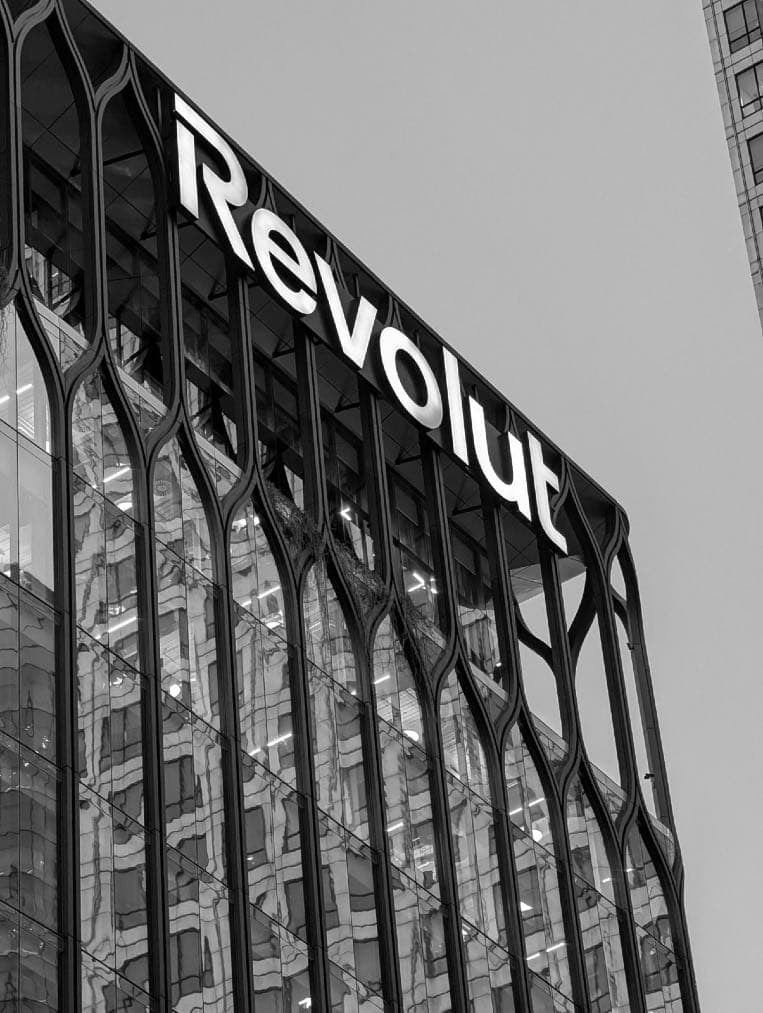
Two 5m flex face letters installed at Revolut's global HQ — heavy-lift sections in excess of 900kg, mixed BMU and rope access.
Read more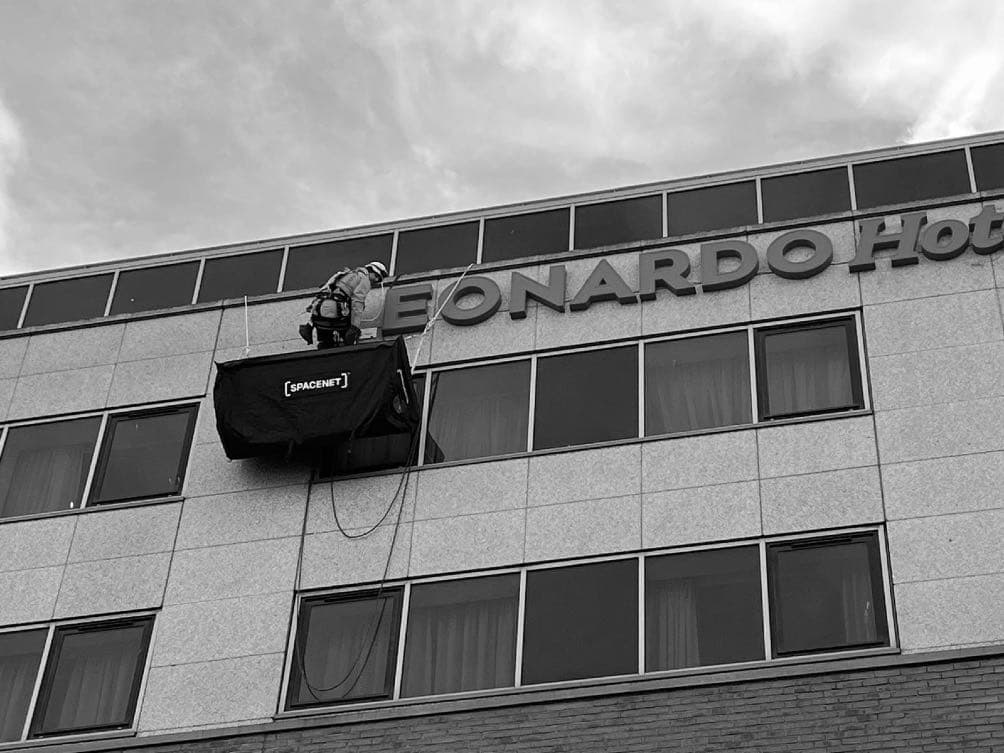
Nationwide signage rollout converting the Jurys Inn estate to Leonardo Hotels — flex face, built-up and totem signage across the portfolio.
Read more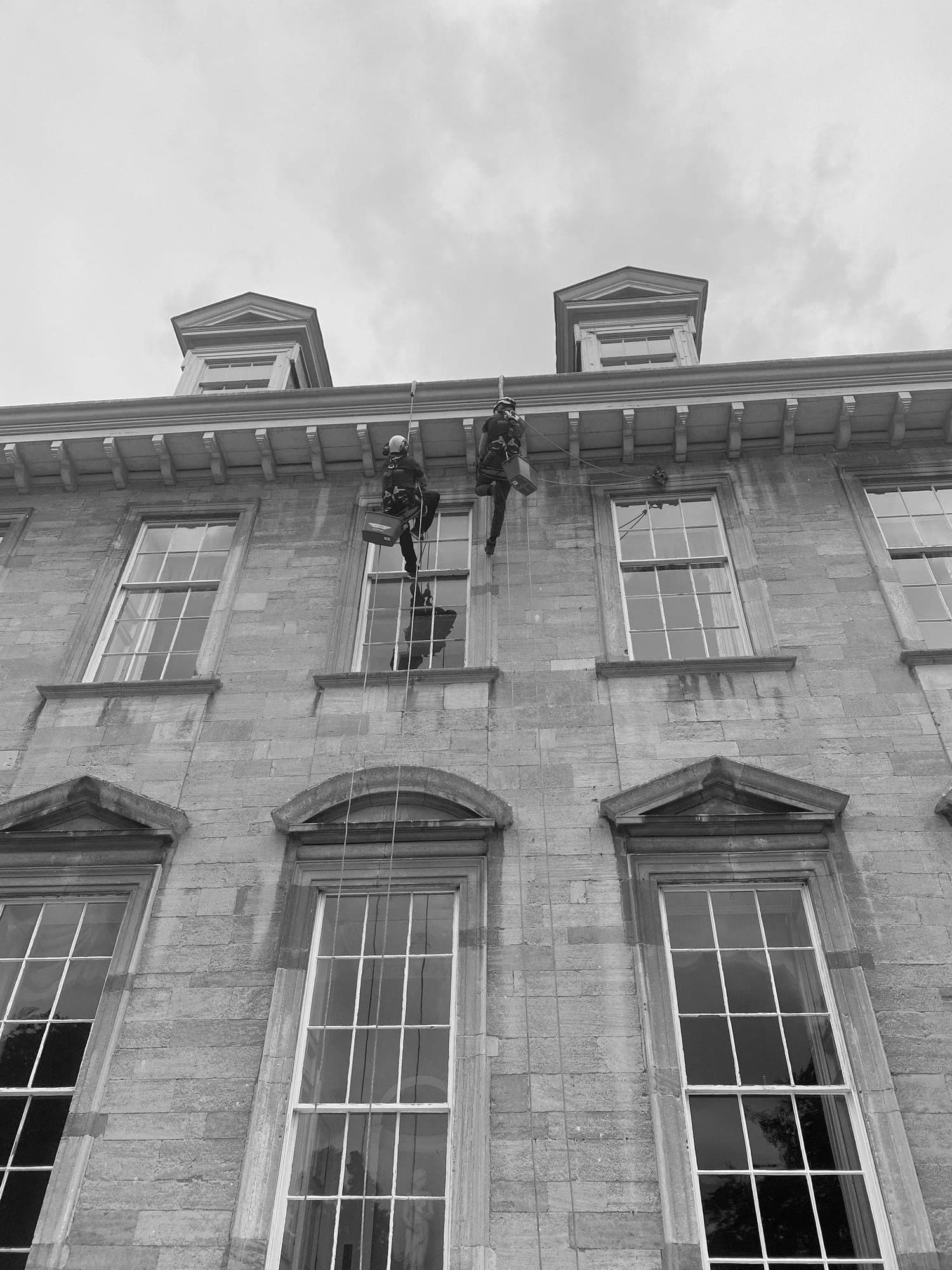
Restoration of original timber sash windows on a Grade I listed hall, delivered while the building continued to host events.
Read more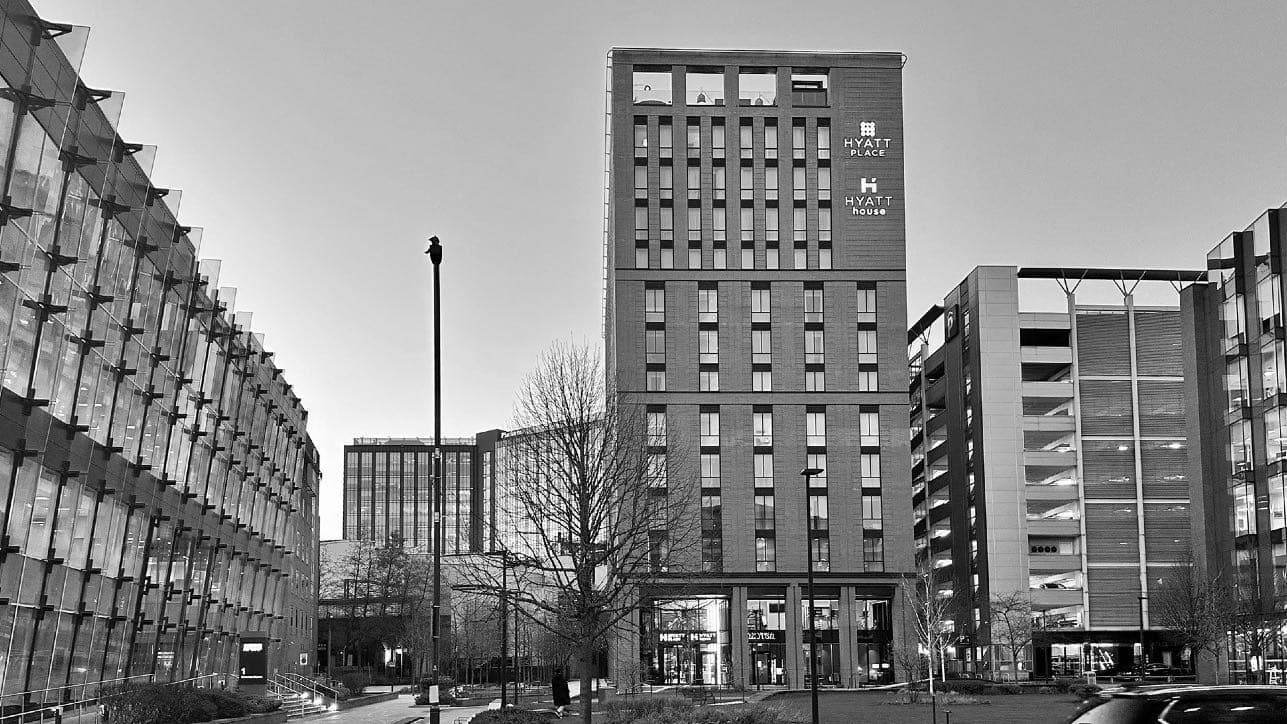
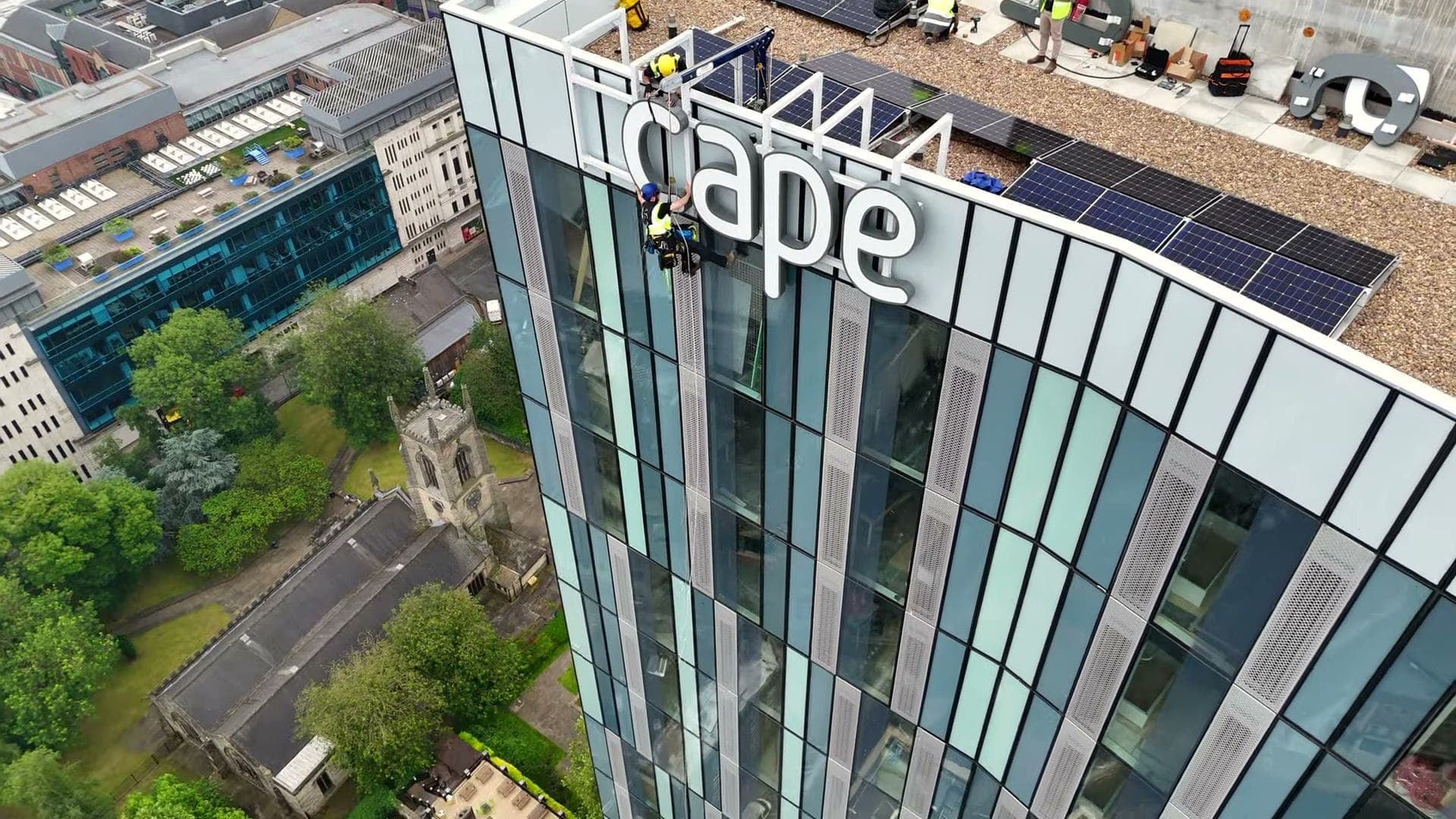
Four sets of illuminated built-up lettering installed during the live construction phase, with bespoke temporary anchorage.
Read more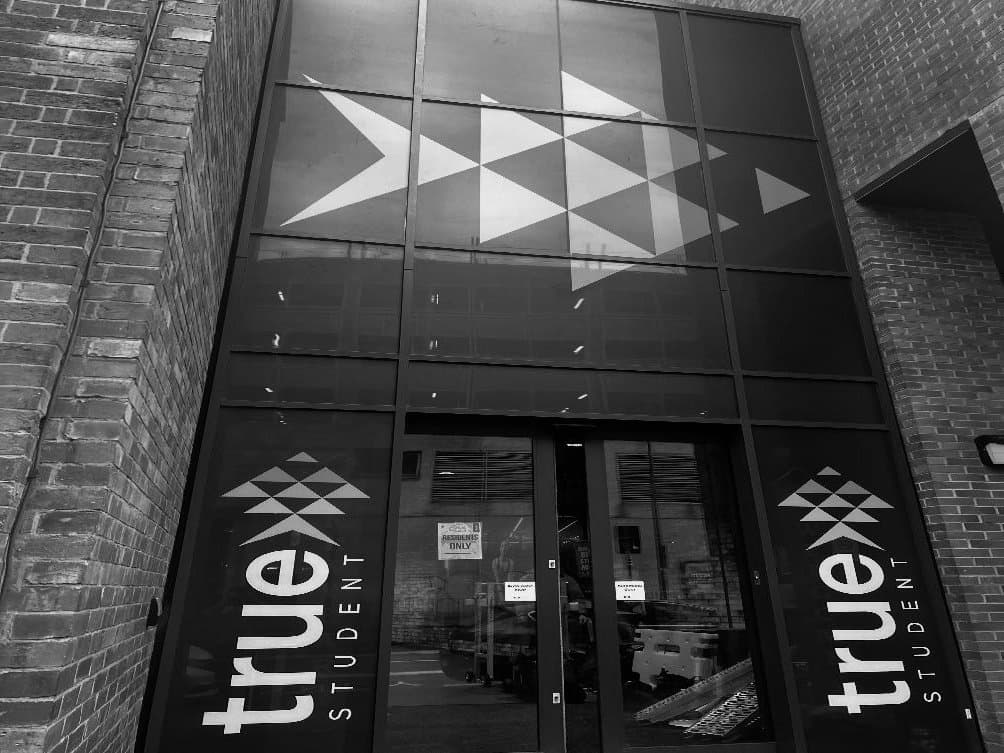
Multi-site brand rollout across student accommodation buildings — built-up signage, contra-vision vinyl and large-format banners.
Read more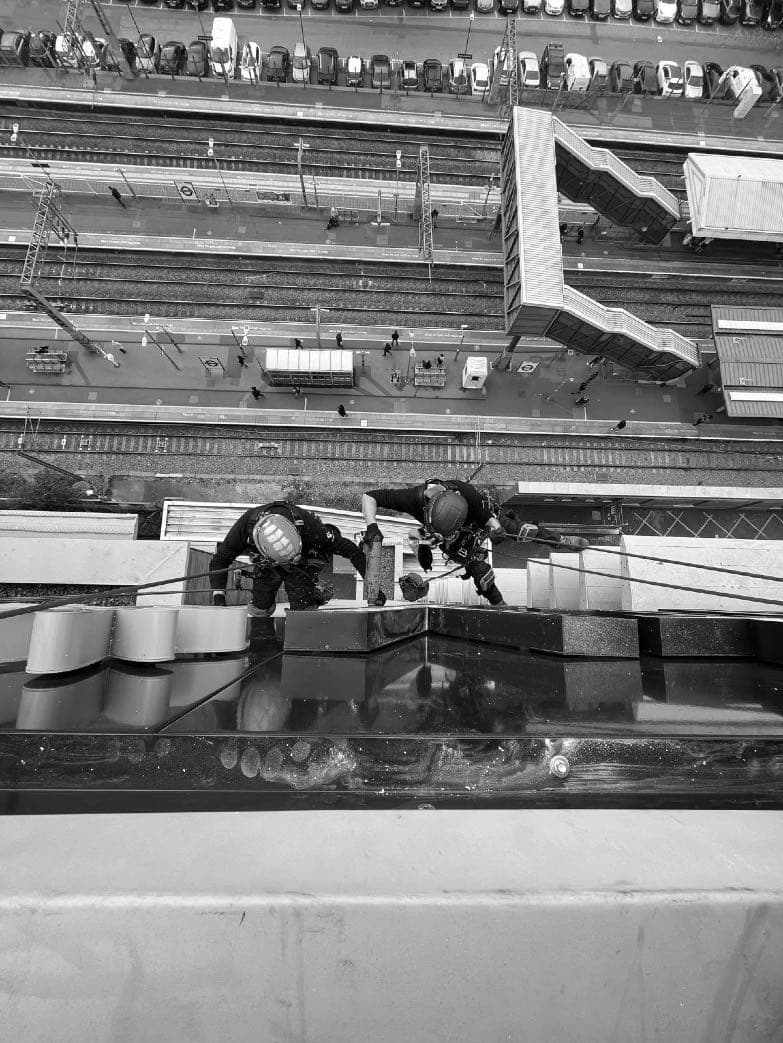
Two 7.5m illuminated tray signs installed adjacent to live railway infrastructure, delivered in coordination with Network Rail.
Read moreContact our Rope Access team today about your project. We aim to respond within 24 hours.