Apex Access Group
Trust. By Design
Apex Access Group — fall protection rail systems works at height

Rigid rail fall arrest systems

Rigid rail fall arrest and rope access rails — a hands-free traverse on a fixed track, for overhead, horizontal, vertical and facade use.

What is a rigid rail fall arrest system?

A rigid rail system is a fall arrest track: an aluminium rail fixed to the structure, with a trolley that runs along it and follows the user. Under EN 795 it is a Type D anchor device. Because a rail doesn't deflect the way a cable does, it suits places with very little room to fall — a crane runway, a loading bay, a mezzanine — and it gives a smooth, hands-free traverse where several users share a run. Rail can be mounted at ground level, on a wall or overhead, and can turn corners and branch between work areas. A second kind of rail is made for rope access: fixed along a facade, it gives technicians a permanent, repeatable route to suspend from. Apex is an authorised installer for FallProtec, whose SecuRail Pro comes in fall arrest and rope access versions, and for Harken, whose Access Rail is a track-and-car system for suspended working along a fixed route. Track, trolleys and end stops are sized to the span and loading and fixed to the supporting structure.

How we deliver.

FallProtec SecuRail Pro

An anodised-aluminium rail to EN 795:2012 Type D for ground, wall and overhead mounting, with spans of up to 6 m and two users between brackets. Curved rail, junctions and a four-way switch let one system follow a runway, turn a corner or split between work areas.

View product →

Overhead rail

Rail suspended above loading bays, vehicle tops, production lines and crane runways, where the work is on top of something and there is little room to fall.

Overhead fall protection →

Rope access rail

A facade-mounted rail that rope access technicians suspend from, giving a permanent, repeatable access route along a building.

Facade access systems →

Harken Access Rail

A CE-certified track-and-car rail that lets a technician move along a structure while attached and lock off at a working position, with separate cars for the working line and the fall arrest back-up.

View product →

Where we deliver.

Rail is used where a cable lifeline isn't suitable — little room to fall, shared runs and fixed access routes. Apex installs across the UK.

  • Gantry & crane runways
  • Loading bays & vehicle tops
  • Production lines & machine maintenance
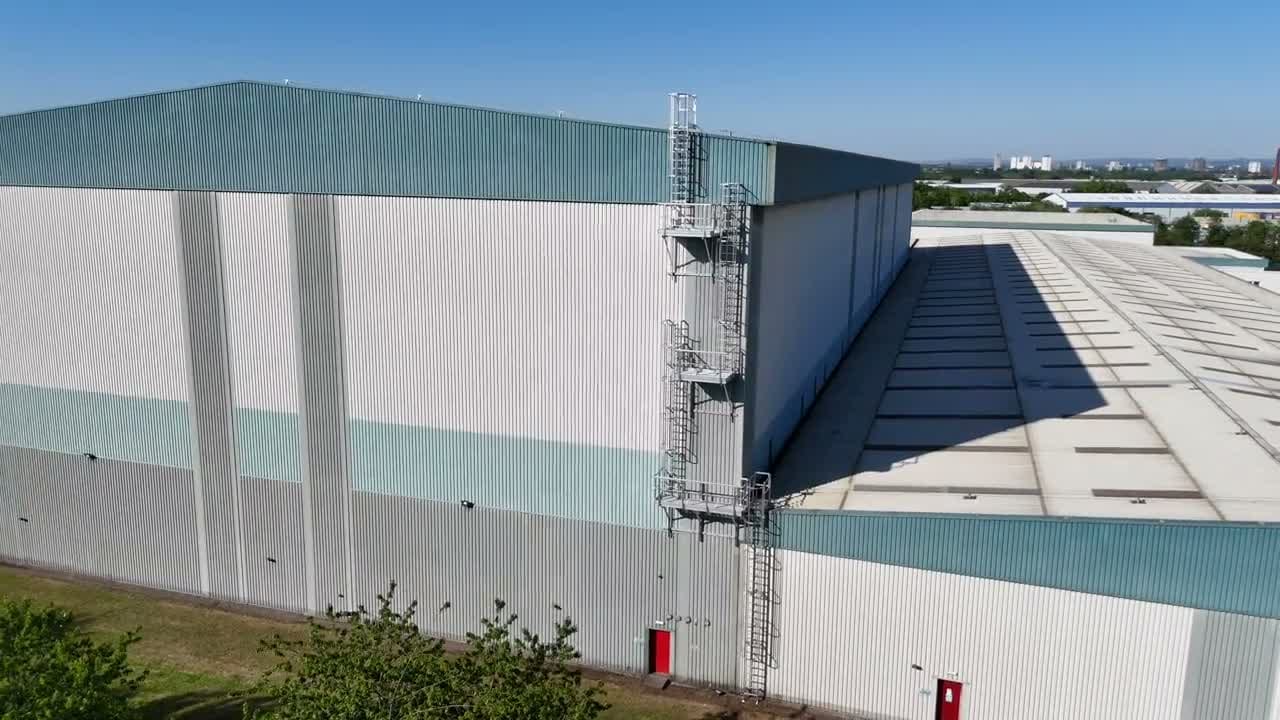
  • Industrial & commercial roofs
  • Facades & high-rise
  • Warehouse & logistics

FAQs.

When is a rigid rail better than a cable lifeline?
When there is very little room to fall, because a rail doesn't deflect the way a cable does, and when a hands-free traverse or several users on one run is needed. A cable lifeline is usually the better value on an open roof with good clearance.
Can a rail go round corners or branch between bays?
Yes. FallProtec makes curved rail, junctions and a four-way switch, so one system can follow a runway, turn a corner or split between work areas.
Is there a rail for rope access?
Yes. SecuRail Pro for rope access is a facade-mounted rail that technicians suspend from, and the Harken Access Rail is a track-and-car system for suspended working along a fixed route. Apex is an authorised installer for both.
How many people can use a rail at once?
FallProtec rates SecuRail Pro for up to two users between brackets. The layout on a particular structure is confirmed at survey.
How often does a rail system need inspecting?
At least every 12 months, and more often if the manufacturer specifies it. Apex inspects and recertifies rail systems as part of its inspection programmes — see Inspection & Testing.

Talk to our Fall Protection team about rail systems

Contact our Fall Protection team today about your project. We aim to respond within 24 hours.

  1. 1Contact
  2. 2Project
  3. 3Details